Supply chain security stories often focus on confirmed compromises. But many real risks begin much earlier, with small and legitimate changes that quietly weaken trust.
This post is about how a valid npm release introduced behavioral changes that reduced established trust signals, how those changes were detected early, and why this class of signal matters for both maintainers and consumers.
What We Observed
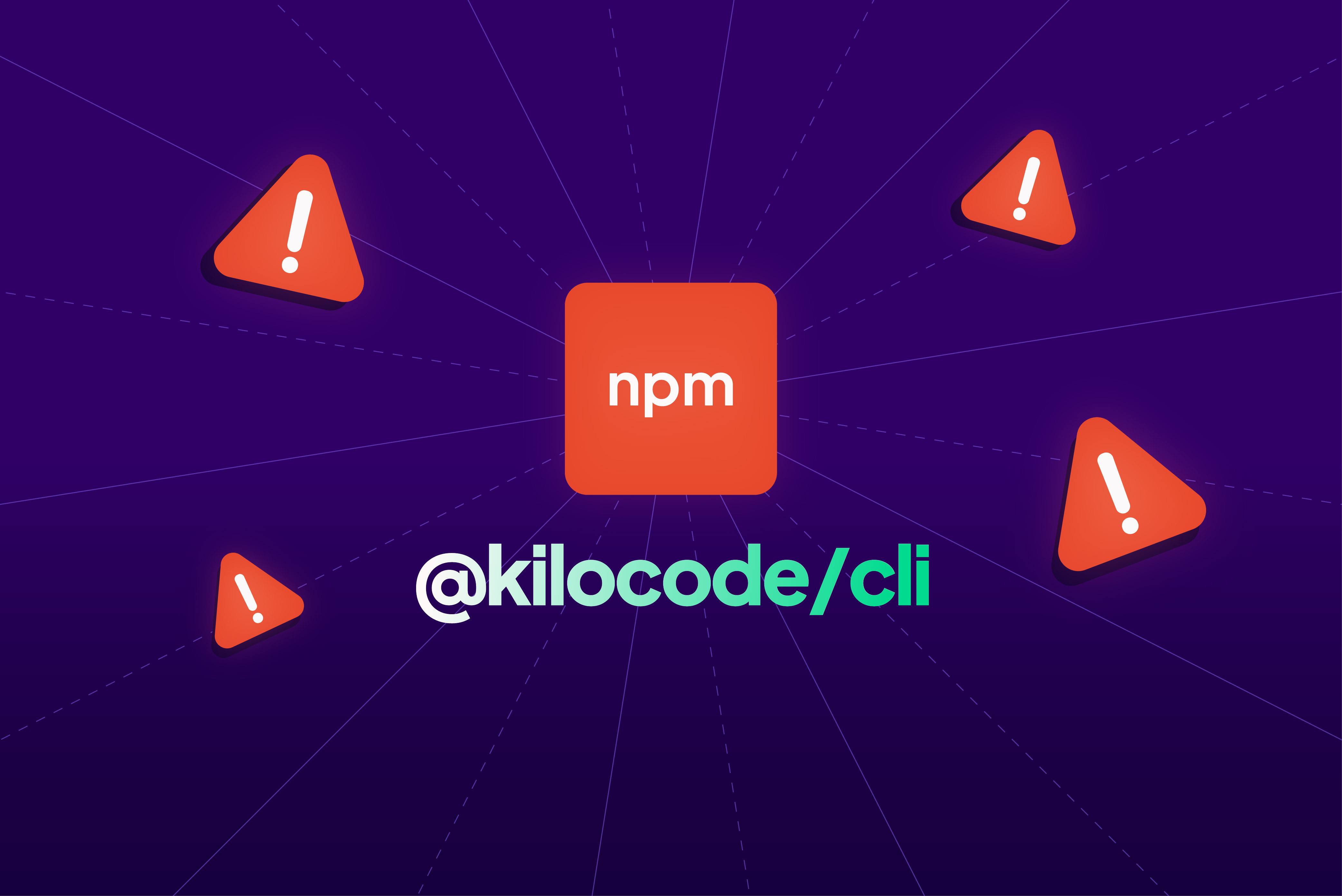
On January 29, StepSecurity’s monitoring flagged a new npm release of @kilocode/cli that differed from previous releases in several important ways.
The release showed:
- Missing npm provenance attestations, even though earlier versions included them. The release pipeline had moved to a new repository, and provenance was not carried over.
- A newly introduced postinstall script. The script performs OS and architecture detection and creates symlinks to platform-specific binaries such as @kilocode/cli-darwin-arm64. The binaries were not verified using checksums or signatures.
These changes stood out because they altered how the package is built, published, and executed during installation.
The release was legitimate. We opened a GitHub issue to flag the risk signals, and the maintainers responded quickly and fixed the issues.
You can see the full discussion here: https://github.com/Kilo-Org/kilocode/issues/5547
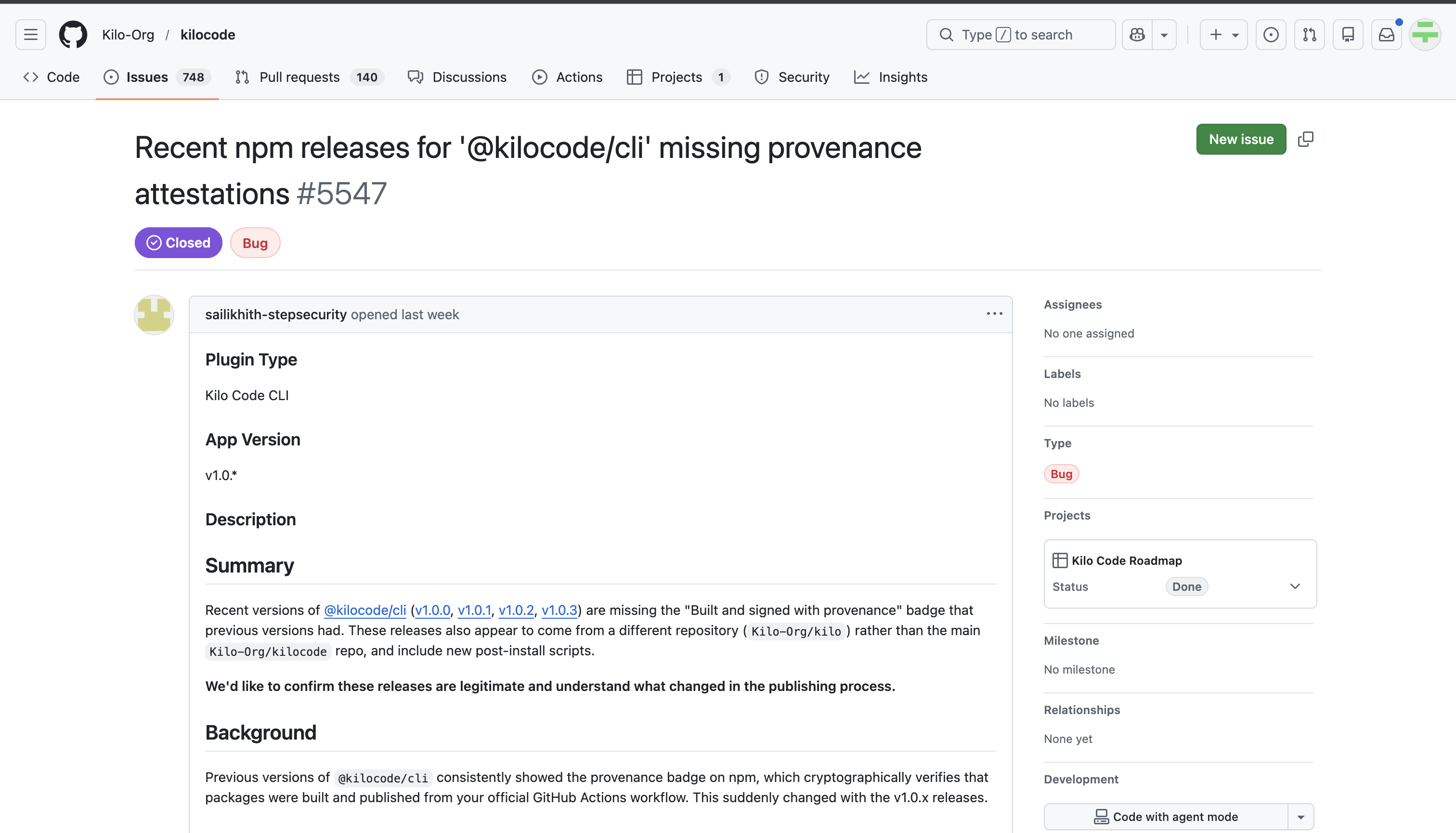
This was a positive outcome and a good example of maintainers engaging constructively on security feedback.
Why This Was Interesting
The reason this release mattered had nothing to do with malicious intent. It mattered because it changed trust assumptions.
Post-install scripts are a high-risk execution point
Post-install scripts run automatically on developer machines with user privileges. This makes them a powerful and sensitive mechanism.
Recent campaigns, including Shai-Hulud, have abused post-install scripts to gain an initial foothold by:
- Dropping malicious binaries
- Executing shell commands
- Exfiltrating credentials
Introducing a new post-install script is therefore a meaningful behavioral change, even when the goal is convenience or platform support.
When binaries are fetched or linked during installation, verifying their integrity with checksums or signatures is critical.
Provenance can be lost during routine pipeline changes
Moving a release pipeline or changing repositories is common and often necessary.
What is easy to miss is the silent loss of provenance attestations during that transition.
Provenance provides cryptographic proof of where and how a package was built and published. When it disappears, consumers lose an important trust signal, even though the package may still function exactly as expected.
Nothing breaks, but trust is weakened.
Supply chain issues often start as valid releases
Many high-impact supply chain attacks did not begin with obviously malicious code.
They started with legitimate releases that introduced new behavior, new execution paths, or new assumptions about trust.
By the time malware is present, the opportunity for early intervention is often gone.
This is why detecting behavioral changes matters.
How This Was Detected
This signal was identified by StepSecurity’s agentic package analysis platform, which continuously evaluates npm packages and releases in real time.
The system evaluated:
- Changes in release behavior compared to prior versions
- Loss of previously present provenance attestations
- Introduction of install-time execution paths
- Binary handling without integrity verification
This type of analysis focuses on deviation and risk signals, not just confirmed incidents.
Our goal is to surface these signals early, while there is still time to respond and fix issues before they escalate.
Best Practices for npm Maintainers
If you maintain npm packages, especially widely used CLI tools, a few practices can significantly improve trust:
- Preserve provenance attestations across all releases. Even when changing repositories or CI pipelines, ensure provenance remains intact.
- Treat post-install scripts as a last resort. If you must use them, keep logic minimal and transparent.
- Verify all binaries used during installation. Use checksums or signatures to ensure integrity.
- Assume consumers are monitoring behavior changes. Clear documentation and consistency build long-term trust.